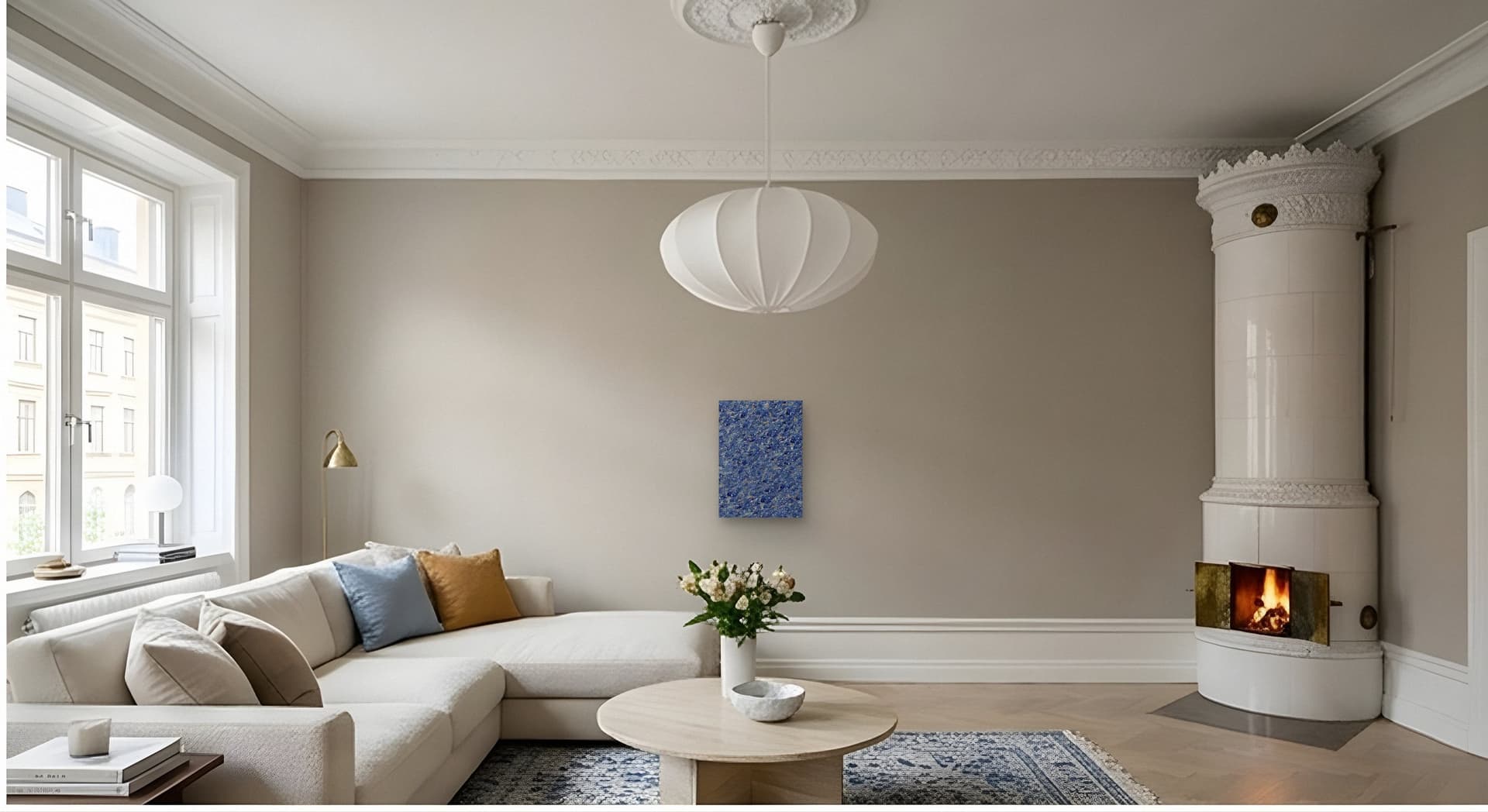
Print only is cheapest and suits texture; framed arrives ready to hang and suits a wall the whole room sees; canvas has no glass, so it works opposite a window.
Three formats, three different reasons to choose them.
Print only. The artwork on 200gsm matte fine art paper, cut to the size you choose, no frame. This is the cheapest way to get a large piece on the wall, and it's the right choice if you already own frames or want to pick your own. Paper suits work where the surface matters: texture, brush marks, colour fields.
Framed. The same paper, arriving in a solid wood frame with shatterproof plexiglass, ready to hang. You pay the frame's cost, not a markup on it. Worth it when the wall is visible from the whole room, when the piece is a gift, or when you simply don't want another trip to the framer.
Canvas. Stretched on a wooden frame, no glass. Canvas absorbs light instead of reflecting it, so it works in bright rooms where glass would mirror the window. The texture suits looser, painterly work; it flatters detail less.
Framed with a gallery border is a fourth option, and it's the one people underestimate: the same frame, with white space printed around the artwork. The border gives the eye somewhere to rest and makes a piece look considered rather than posterish. It suits dense, full-colour work especially well.
Practical notes: glass reflects, so avoid framed pieces directly opposite a window. Canvas is lighter than a framed print of the same size, which matters on plasterboard walls. And in a bathroom or a kitchen, glass wins over canvas every time.